Goods Sort Match - Sorting Fun
GamoVationPuzzle
4.8390.00 Reviews
- Version
- 1.1.1
- Installs
- 1.00M
- Age Rating
- Everyone
Screenshots
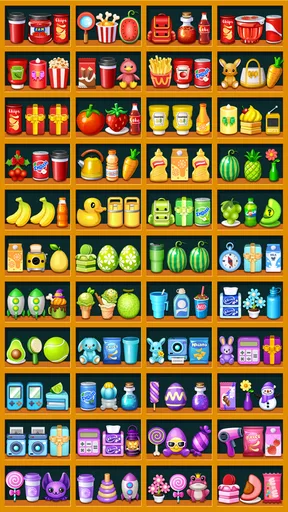
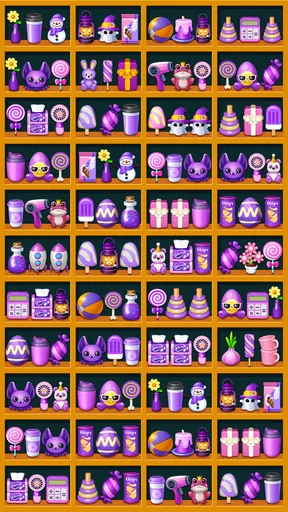
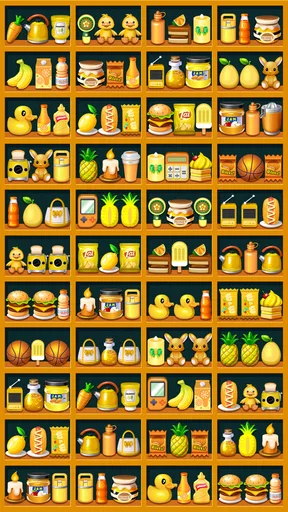
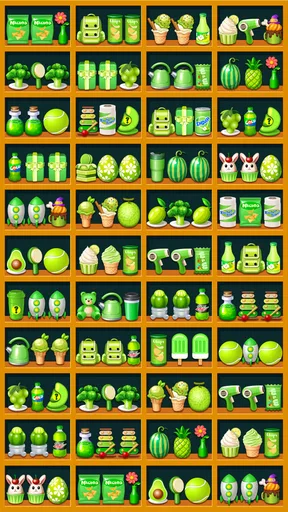
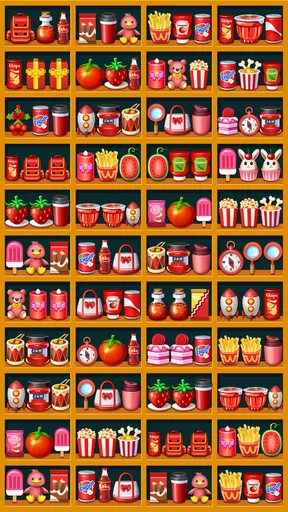
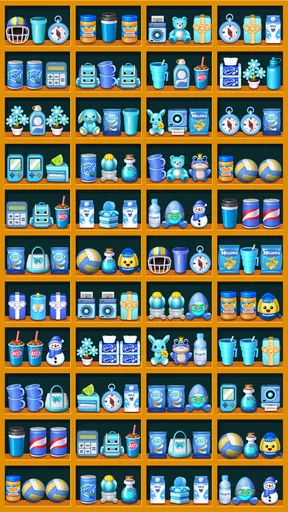
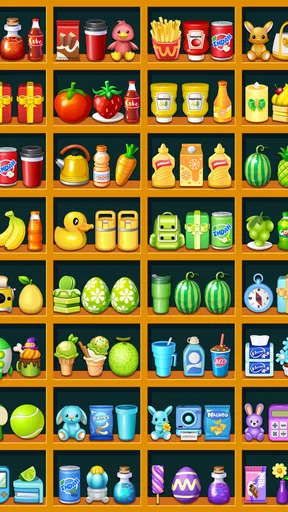
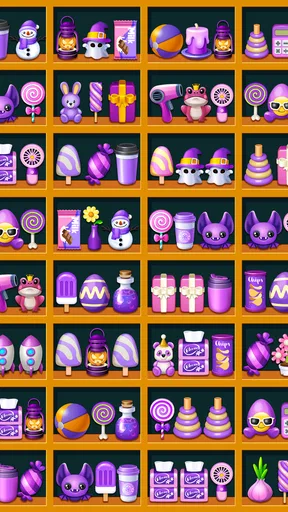
Our Review of Goods Sort Match - Sorting Fun
 Analysis by Appyee
I went into Goods Sort Match - Sorting Fun expecting a simple matching game, and that is exactly where its appeal begins. The basic idea is easy to understand: sort goods, find matching items, and keep the shelves or display area organized through a series of small decisions. It belongs to the puzzle category, but it is less about solving one complicated riddle and more about creating a steady rhythm from observation, selection, and tidy results.
That rhythm makes it a natural fit for short breaks. I can imagine opening it while waiting for an appointment, playing a few rounds after lunch, or using it as a gentle way to switch off before bed. The game is free, rated for Everyone, and developed by GamoVation, so it is positioned as an accessible choice rather than a specialist puzzle for a narrow audience. Its store summary focuses on relaxing and organizing, and that description matches the central feeling better than a dramatic action-game comparison would.
What matters here is not whether the concept is difficult to explain. It is whether the repeated action stays satisfying after the first few rounds. In my experience, the game works best when I treat each board as a small visual cleanup task: scan what is available, identify a useful match, make the move, and immediately assess what the new arrangement reveals.
How the sorting loop feels in practice
I find the sorting loop most satisfying when I treat each board as a sequence of choices rather than a hunt for the quickest match. A brief scan before moving can reveal which option is likely to open up more of the arrangement, making the play feel considered without turning a short break into homework. That practical rhythm also makes it easier to tell whether the game’s current, focused approach is the right fit for me.
The first action is simple, but the choice still matters
The first move in a sorting puzzle often looks almost trivial. I look across the goods, search for items that belong together, and make a match. The pleasant part is that the game gives me an immediate sense of progress without requiring a long tutorial or a complicated rulebook. I can understand the objective through the board itself.
That simplicity is important for casual players. Someone who does not normally play puzzle games can pick it up without learning a large collection of controls. The interaction is built around recognizing relationships between visible objects, not memorizing a deep system. It feels closer to arranging a messy shelf than to studying a traditional logic grid.
Still, the best opening move is not always the most obvious match. I found it more useful to look at the whole arrangement before acting. A pair that is easy to remove may expose another item, while a different match may leave the remaining goods in a more awkward pattern. This gives the opening seconds a small strategic layer: I am not only asking what can be matched now, but also what the board may look like immediately afterward.
My practical tip is to scan for blocked or less visible goods before clearing the most attractive match. In a sorting game, visible progress can sometimes be less valuable than creating space. When I pause for that quick scan, the board feels more manageable and I make fewer moves that leave me searching for a solution later.
The feedback rhythm keeps the board readable
After a successful match, the most important feedback is the change in the board. Goods disappear, space opens, and the next decision becomes easier to see. That creates a satisfying action-and-response pattern: I select a group, the game confirms the result, and the arrangement changes enough to invite another look.
This is where the relaxing quality comes from. The game does not need a complicated story to keep me engaged because every successful action produces a visible improvement. The board becomes less crowded, and that visual reduction gives each move a small sense of completion. I can understand why another round starts to feel tempting even when I originally planned to play only briefly.
The feedback also helps me judge whether I am playing thoughtfully. If a move opens several useful possibilities, I feel as though I have improved the position rather than merely tapped through it. If it leaves a confusing collection of unmatched goods, I know I should slow down and inspect the remaining layout more carefully.
That distinction separates this experience from a purely automatic matching game. The satisfaction is not only in seeing a match vanish. It comes from seeing how one decision changes the next decision. The board becomes a conversation between the move I just made and the options now available.
Why the reward is the cleared space
Many puzzle games rely heavily on a large score, a dramatic effect, or a competitive ranking to make progress feel meaningful. Goods Sort Match - Sorting Fun takes a more modest route. The reward is closely tied to organization itself. Every successful match makes the goods look more orderly, and that transformation is enough to provide a small payoff.
I like that the reward is easy to understand. I do not have to interpret a complicated result screen to know whether a move helped. The cleared area is right in front of me. That makes the game especially suitable for players who want a calm activity rather than a demanding contest.
There is also a useful mental distinction between a good reward and a loud reward. A loud reward grabs attention for a moment, while a good reward supports the next decision. Here, the cleared space does both jobs: it confirms success and gives me a better view of what remains. The result is a loop in which progress is practical, not merely decorative.
That said, players who need constant novelty may find the reward system too restrained. If your favorite puzzle games are driven by elaborate abilities, dramatic level changes, or intense competition, the organizing satisfaction may not be enough on its own. This game is more convincing as a quiet sorting exercise than as a high-pressure challenge.
The reset is what makes another session possible
Once a board is completed or a session reaches its natural stopping point, the important question is whether I feel finished or simply interrupted. With this kind of puzzle, the reset works because the core action is immediately understandable again. I do not need to rebuild a character, remember a story, or relearn a set of controls before starting over.
A fresh arrangement creates a clean mental reset. The previous board has been organized, and the next one presents a new visual problem. That is a strong design choice for short sessions because it removes friction between finishing one attempt and beginning another. I can stop after a single round, but I can also continue because the next challenge asks for the same familiar skill in a different arrangement.
This is also where the game’s casual identity becomes clear. It is not demanding that I commit to a long campaign every time I open it. The reset supports flexible play: a quick visit when I have only a moment, or a longer sequence when I am in the mood to keep sorting.
My advice is to use the reset as a natural stopping tool rather than automatically continuing. The loop is intentionally easy to repeat, and that can make one more round become several. If I am playing to relax, I get a better experience when I decide in advance whether I want a short break or a longer session.
The small decisions create the real puzzle
Although the premise is friendly, the game is not completely mindless. The challenge grows from managing what is visible and deciding which match will improve the board. That makes it more interesting than simply tapping identical goods whenever they appear.
I found three habits particularly useful. First, I check the edges of the arrangement because those areas can be easy to overlook. Second, I avoid committing too quickly when several matches are available, since the order of clearing can affect what becomes visible. Third, I use the newly opened space as information, not just as a reward. The empty area tells me which goods were limiting my choices and which part of the board deserves attention next.
These habits are not complicated techniques, but they change the feel of play. Instead of reacting to the most noticeable object, I begin to read the board as a sequence of opportunities. That is the point at which the game becomes a genuine puzzle rather than a simple sorting animation.
For a parent looking for a light game that can be understood quickly, the Everyone age rating is reassuring. The concept is approachable, and the visual task of organizing goods is easy to explain. I would still suggest that younger players begin with an adult nearby if they are unfamiliar with puzzle games, not because the rules are difficult, but because talking through the choices can make the first sessions more enjoyable.
Where it fits among other puzzle games
Compared with a traditional match-three game, this experience feels less focused on building chains across a fixed grid. The emphasis is on sorting and arranging goods, so the satisfaction comes from making a cluttered selection more orderly. That difference matters if you enjoy visual organization more than fast combinations.
Compared with a pure hidden-object game, the goal is more active. I am not only searching for something specific; I am deciding what to do with the items once I recognize them. Compared with a difficult logic puzzle, the pressure is lower and the rules are easier to enter, although the order of actions still gives careful players something to think about.
The trade-off is depth. A specialist puzzle title may offer more elaborate systems, stronger long-term planning, or a more demanding difficulty curve. Goods Sort Match is better for someone who wants a clear loop that can be enjoyed without a large learning investment. If you want a game that tests advanced deduction for long stretches, another puzzle style may suit you better.
A realistic everyday use case
Imagine having ten minutes before leaving for work. You open the game, make a few matches, and watch the arrangement become less crowded. You do not need sound, a story recap, or a long preparation period to understand what you are doing. If the time runs out, you can close the game after a natural stopping point. If you have a little longer, the reset gives you a reason to begin again without making the session feel like a major commitment.
That same quality works during a commute, provided you are in a safe situation and not responsible for driving. It also suits a quiet evening when I want something more engaging than scrolling but less demanding than a competitive title. The game gives my attention a narrow, manageable task: find order in the goods, make a choice, and respond to the result.
One less obvious use is as a transition between activities. I can play a short session after finishing work because the board provides a clear change of focus. The act of completing a small visual task helps me leave one activity behind before starting another. That does not make it a productivity tool, but it does explain why the organizing theme can feel more calming than a game built around urgency.
What may cause friction
The same repetition that makes the game accessible can also limit its appeal. The central action remains sorting goods and matching related items, so players who need a constant stream of new mechanics may eventually want more variety. The loop is polished around its basic idea, but the basic idea remains the center of everything.
Another possible limitation is that the relaxing pace may feel too gentle for players who enjoy pressure. If you prefer puzzles where every second matters or where mistakes have severe consequences, this may not provide enough intensity. It is designed around observation and organization, not adrenaline.
I also think the game asks players to accept a certain amount of visual scanning. That is enjoyable when I am in the mood to inspect the arrangement, but it can feel slower when I want instant action. The better choice depends on what I am looking for at that moment: a calm sorting task or a faster, more explosive puzzle.
Because it is free, it is easy to try without making a financial commitment. The practical question is whether the repeated loop earns a place on your phone. For me, the answer is yes when I want short, low-pressure puzzle sessions. I would skip it if my priority were deep strategy, narrative progression, or competitive play against other people.
Technical entry point and accessibility
The game supports devices running Android 6.0 or later, which makes it available to a broad range of Android users. The current version is 1.1.1, and the title has already attracted over a million installs. Its average rating is 4.8 from around 56 thousand ratings, with roughly 390 written reviews, so there is clear interest from people who enjoy this style of casual puzzle.
Those figures are useful context, but they do not replace personal fit. A high rating cannot tell me whether I will enjoy repeated sorting, and a large install base does not guarantee that the game will provide the kind of challenge I want. What it does suggest is that the concept is easy for many players to approach and that the central loop has broad appeal.
The free price also makes the decision straightforward: install it when you want to test the organizing concept, then judge it by how naturally you reach for another session. I would not choose it solely because it is popular. I would choose it because the first action is clear, the feedback is immediate, and the reset makes returning uncomplicated.
Who should try it and who should pass
I recommend it to players who enjoy tidy visual layouts, matching tasks, and games that can be played in small portions. It is particularly suitable if you like seeing a messy arrangement become orderly and prefer decisions that are understandable without being completely automatic.
It is also a good option for someone introducing a casual puzzle game to a family member who may be put off by complicated controls. The Everyone rating and straightforward sorting concept lower the barrier to entry. A new player can watch one move, understand the goal, and begin experimenting.
I would point more demanding puzzle fans toward another option if they want layered deduction, a strong story, or a competitive ladder. I would also suggest skipping this one if the organizing theme does not appeal to you, because the theme is not a thin decoration placed over a different game. Sorting goods is the experience, and the loop depends on finding that satisfying.
My verdict on the action-feedback-reward-reset loop
Goods Sort Match - Sorting Fun succeeds because each stage of its loop supports the next. The first action is approachable, the feedback is visible, the reward is the growing sense of order, and the reset makes a new board feel easy to begin. None of those parts tries to overwhelm the others, which is why the game feels comfortable in short sessions.
Its strongest quality is focus. GamoVation has built the experience around one recognizable activity instead of asking the player to manage a large collection of systems. The result is not the deepest puzzle game I have played, but it is a clear and pleasant one. When I want something calm that still asks me to pay attention, the sorting loop gives me enough involvement without becoming exhausting.
The main caution is equally clear: if the core action stops being satisfying, there is not a separate story or competitive structure here to rescue the experience. This is a game for people who genuinely enjoy matching and organizing goods. For that audience, the free entry point, broad device support, and gentle reset make it easy to recommend. For everyone else, a more varied or demanding puzzle may be the better choice.
My final recommendation is to try it when you want a small, focused break rather than a major gaming session. Start by scanning the whole arrangement, choose moves that open useful space, and let the cleared board guide your next decision. If that simple cycle feels rewarding, you will understand why another session begins almost by itself.
Verdict
Strengths of Goods Sort Match - Sorting Fun
- Simple sorting mechanics are easy to learn and play casually.
- Short levels fit well into quick breaks or commutes.
- Bright visuals make item categories easy to recognize.
- Increasing difficulty keeps the gameplay engaging over time.
- Offline play is convenient when an internet connection is unavailable.
Limitations of Goods Sort Match - Sorting Fun
- Some levels can feel repetitive after extended play sessions.
- Later stages may rely heavily on precise item recognition.
- Hints or boosters may be limited without watching ads or spending currency.
- Frequent advertisements can interrupt the flow between levels.
- The game may use noticeable battery power during longer sessions.
Other Releases by GamoVation
View All
Tile Club - Match Puzzle Games
Puzzle4.8

Chess - Offline Board Game
Board4.8

Mahjong Club - Solitaire Game
Board4.8
Similar Picks in This Category
View All
Block Blast!
HungryStudio4.8

Braindom: Brain Games Test
Lahana Game Studio4.6

AMAZE!
CrazyLabs LTD4.6

Sudoku - Classic Sudoku Puzzle
Oakever Games4.7

Art Puzzle - Puzzle Games
Easybrain4.8

Amaze GO!
Oakever Games4.9
Frequently Asked Questions
What is Goods Sort Match - Sorting Fun?
Goods Sort Match - Sorting Fun is a casual puzzle game focused on organizing products into matching groups. You typically sort items on shelves, combine identical goods, and complete objectives before running out of space or moves. Its simple drag-and-drop gameplay is easy to understand, while increasingly crowded layouts and limited resources add a moderate challenge for players who enjoy relaxing sorting games.
How do you play Goods Sort Match - Sorting Fun?
Gameplay generally involves examining a shelf or storage area, identifying matching products, and moving items into the correct positions or groups. Completing matches clears space and helps you reach the level goal. Planning is important because poorly arranged goods can block useful moves. Take a moment to check the whole board before acting, especially on later stages where available space and item placement become more restrictive.
Is Goods Sort Match - Sorting Fun free to download and play?
The game can usually be downloaded without an upfront purchase, allowing you to try its core sorting levels for free. However, free mobile puzzle games may include optional advertisements, rewarded videos, or in-app purchases for hints, boosters, extra moves, or other conveniences. Availability and pricing can vary by platform and region, so review the store listing before downloading and check purchase settings if children use the device.
Does Goods Sort Match - Sorting Fun require an internet connection?
Many sorting levels may be playable offline after the game has been installed, which makes it suitable for short sessions while traveling or when mobile data is unavailable. Nevertheless, features such as advertisements, cloud progress, events, leaderboards, updates, or purchases may require an internet connection. The exact offline functionality can change with updates, so test the game in airplane mode before relying on it completely.
Is Goods Sort Match - Sorting Fun suitable for children and casual players?
The basic matching and sorting mechanics are approachable for children, beginners, and adults looking for a low-pressure puzzle experience. Even so, parents should check the current age rating, advertising content, privacy information, and in-app purchase options before allowing unsupervised play. Some levels can become more demanding, so younger players may need help understanding the best order for moving items and managing limited shelf space.
Play our best games!


